When Your Nervous System is Stuck in Survival Mode
How to Regulate a Nervous System that is Stuck in Survival Mode
Have you ever felt constantly on edge, overwhelmed by seemingly small situations, or exhausted despite getting enough sleep? Maybe you find yourself overthinking conversations, becoming easily irritated, avoiding responsibilities, or feeling disconnected from yourself and others. These experiences may be connected to how your nervous system responds to stress.
Our nervous systems are designed to protect us. When the brain perceives a threat, it activates an automatic survival response to prepare the body for danger. While this response is helpful in threatening situations, prolonged stress can make it difficult for the body to return to a regulated state. Over time, everyday stressors may begin to feel like threats (American Psychological Association [APA], 2022).
Understanding the Survival Response
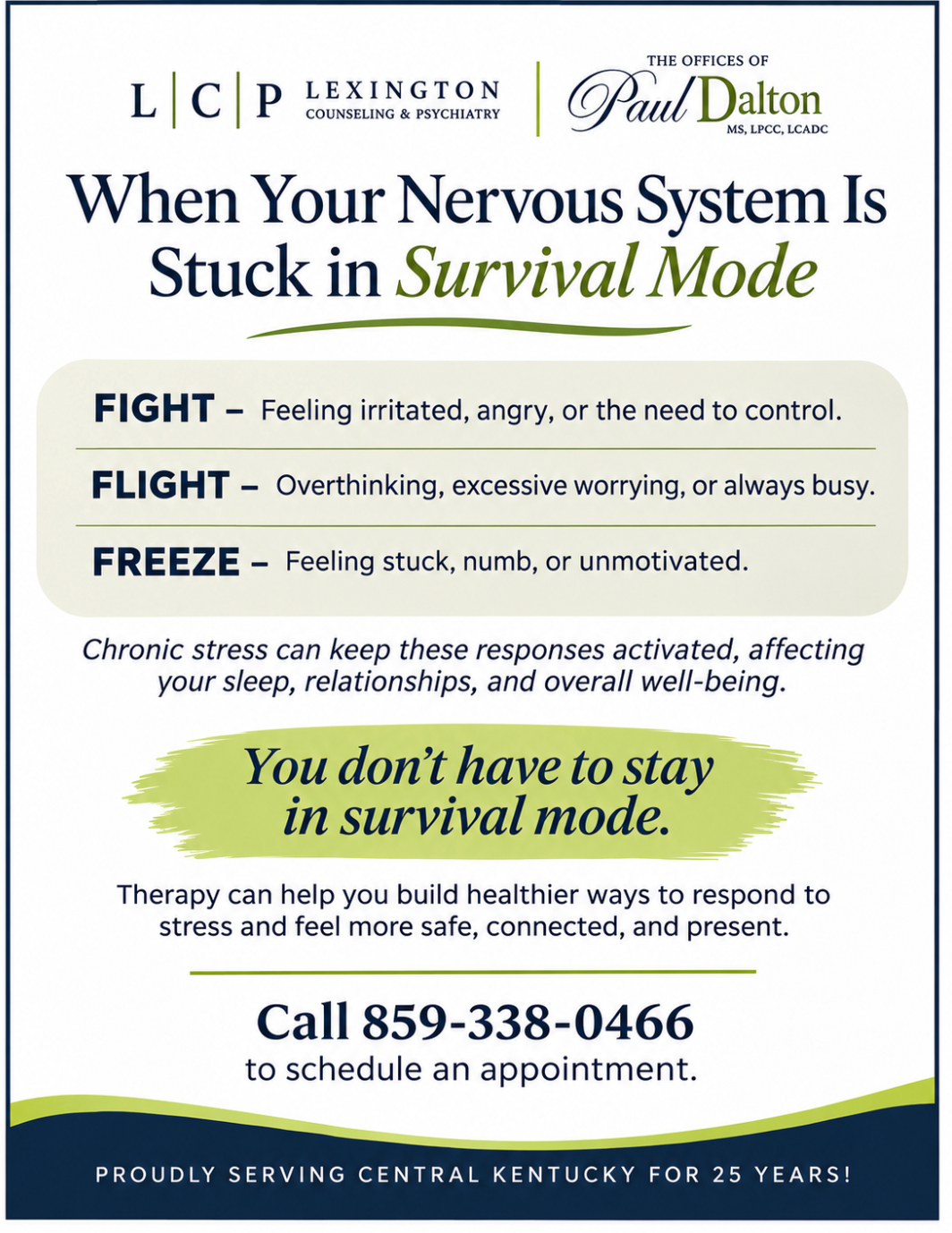
The fight, flight, and freeze responses are automatic protective mechanisms. They are not intentional behaviors or character flaws, but rather ways the body attempts to maintain safety when it perceives a threat. These responses can look different from person to person:
- Fight: Irritability, anger, defensiveness, frustration, or feeling the need to control situations.
- Flight: Excessive worrying, overthinking, perfectionism, people-pleasing, avoidance, or staying constantly busy.
- Freeze: Feeling stuck, emotionally numb, disconnected, unmotivated, or struggling to make decisions.
Individuals may experience different responses depending on their environment, past experiences, and perceived level of safety (Cleveland Clinic, 2024).
How Chronic Stress Affects Daily Functioning
The body's stress response is intended to be temporary. However, ongoing stress, unresolved trauma, and prolonged exposure to challenging environments can contribute to repeated activation of the body's stress response. Research suggests that chronic stress can affect multiple systems throughout the body, including the cardiovascular, digestive, immune, and nervous systems (McEwen, 2017). You may notice these effects through:
- Difficulty concentrating or making decisions.
- Feeling constantly overwhelmed or emotionally exhausted.
- Increased irritability or sensitivity to criticism.
- Difficulty relaxing, even when nothing is wrong.
- Changes in sleep, appetite, or physical tension.
- Withdrawing from relationships or social interactions.
Sometimes, what appears to be procrastination, irritability, or a lack of motivation may be connected to an overwhelmed stress response. Recognizing these patterns can help shift the focus from self-criticism toward understanding what your mind and body may need.
How to Help Your Nervous System Feel Safe Again
Regulating your nervous system does not mean eliminating stress or never experiencing uncomfortable emotions. Instead, it involves recognizing stress responses, tolerating discomfort, and learning to return to a more regulated state. Consider incorporating these strategies into your daily routine:
1. Practice grounding techniques. Redirect your attention to the present moment by identifying five things you see, four things you feel, and three things you hear.
2. Incorporate intentional breathing. Try gently inhaling for four seconds and exhaling for six seconds. Comfortable, slower breathing may help reduce physiological arousal.
3. Establish predictable routines. Consistent sleep schedules, regular meals, movement, and intentional downtime can support stress management.
4. Recognize your triggers. Pay attention to situations, interactions, or thoughts that contribute to feeling overwhelmed. Awareness can help you respond more intentionally rather than automatically.
5. Practice emotional regulation. Rather than suppressing uncomfortable emotions, practice acknowledging what you feel without allowing the emotion to dictate your next action.
6. Seek support when needed. Therapy can provide a supportive environment to explore underlying stressors, develop healthier coping strategies, and process experiences that may continue influencing your responses.
Healing Is About More Than Just Calming Down
Feeling stuck in survival mode does not mean something is wrong with you. Your responses may have developed as ways to navigate difficult or overwhelming experiences. What once helped you cope may no longer be serving you in your current environment. Learning to recognize these patterns is an important first step toward meaningful change. With consistent practice, supportive relationships, and appropriate therapeutic intervention, you can develop healthier ways of responding to stress.You do not have to spend your life in survival mode. You deserve to experience a sense of safety, connection, and balance in your daily life.
If chronic stress, anxiety, or past experiences are affecting your daily functioning, working with a licensed mental health professional may help you better understand your responses and develop tools for lasting change. Call Lexington Counseling and Psychiatry To schedule an appointment at 859.338.0466. We offer services in Lexington, Frankfort, and Richmond, Kentucky, and have been a trusted mental health provider in Central Kentucky for 25 years!
REFERENCES:
American Psychological Association. (2022, October 31). How stress affects your health. https://www.apa.org/topics/stress/health
Cleveland Clinic. (2024, July 22). What is the fight, flight, freeze or fawn response? https://health.clevelandclinic.org/what-happens-to-your-body-during-the-fight-or-flight-response
McEwen, B. S. (2017). Neurobiological and systemic effects of chronic stress. Chronic Stress, 1, 1–11. https://doi.org/10.1177/2470547017692328